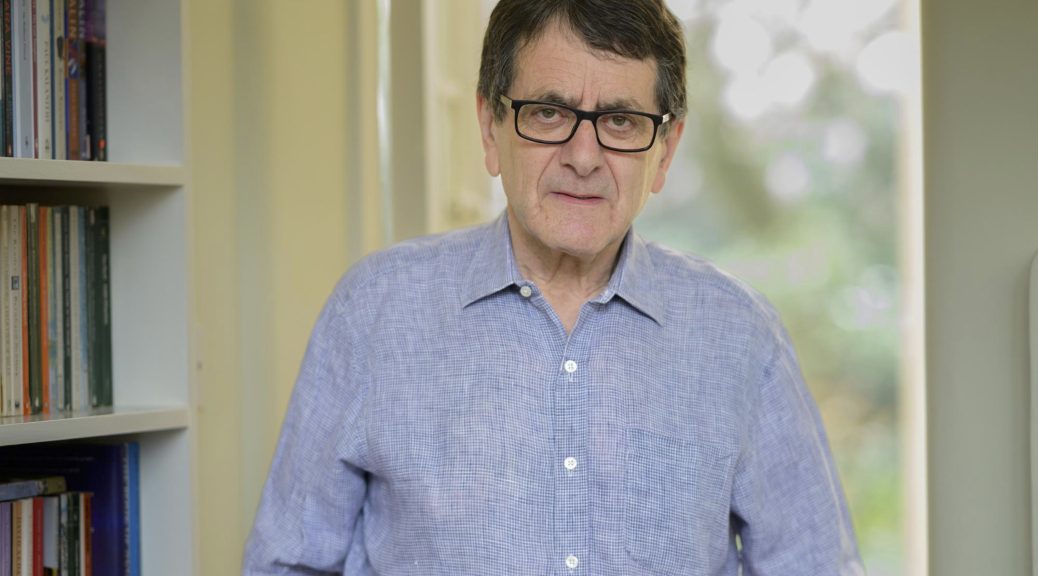
Biography
I have a longstanding interest in, and support of, disability rights, human rights and free speech. I have been a member of Amnesty International and Index On Censorship and supporter of libel reform campaign and charities for neurological disease, epilepsy, head injured and disabled children. I have served on the Board of Governors of two British epilepsy charities, the Epilepsy Society and the Action Epilepsy.
I am a keen author, and have written a number of books, the latest being On Books, the creative work of Susan Allix with a catalogue Raisonné and The Idea of Epilepsy: a medical and social history of epilepsy in the modern era (1860-2020).
My main interests outside medicine are in music and in bibliography. My musical interests are focused on the XXth century classical music and especially the works of Messiaen and the English, Finnish and Russian composers, and I have appeared as a guest on the BBC radio programme Private Passions discussing these.
My bibliographic interests are in the English fine presses from the 1890s to the present day. I am a supporter of, and donor to, the Pissarro archive at the Ashmolean Museum and have written on the life of Lucien Pissarro and the history of his printing press, the Eragny Press.On the basis of my bibliographic interest, I was appointed to the Honorary position of Harveian Librarian at the Royal College of Physicians between 2012-2016.
My career in the field of epilepsy
My whole clinical career has been as a neurologist with a special interest in epilepsy. I was first introduced to epilepsy as a research registrar supervised by Dr EH Reynolds, and then in 1978 pursued my training as a registrar and lecturer at the National Hospital for Neurology and Neurosurgery, Queen Square, London, under the supervision of Prof RW Gilliatt. In 1983, I was then appointed as a Consultant Neurologist and clinical academic at the National Hospital and have worked there, and for a period at its linked Chalfont Epilepsy Centre, ever since. In this post, I engaged in research, education and administrative duties, and clinical work. For 40 years I had a large NHS clinical practice and over the years I have made tens of thousands of consultations with people with epilepsy, and I hope in so doing have improved lives.
Epilepsy is a complex condition with many social and personal as well as medical implications. My practice of epilepsy has afforded me a privileged insight into all aspects of the condition, and I am enormously grateful to Dr Reynolds, Professor Gilliatt, colleagues at Queen Square and in the ILAE, and especially to my patients for the understanding and intuitions they have provided. Over the years I have written books and papers on medical aspects of epilepsy, its causes and treatment, and my last book, The Idea of Epilepsy, is a summary of its modern history – vital in my opinion for understanding the current position of epilepsy.
My research has been clinically based, and its greatest impact has been in the topics of: monotherapy in epilepsy, the epilepsy treatment gap (carrying out the first research into this and introducing the term), epidemiological cohort studies, studies of mortality and life expectancy, clinical trials of levetiracetam an topiramate, magnetic resonance imaging, status epilepticus and epilepsy therapeutics. In recent times too I have researched into the history of epilepsy and neurology.
My professional administrative activities in epilepsy have been carried out mainly as Director of the Chalfont Epilepsy Centre, on the Executive Committee of the ILAE where I served for 20 years, as Editor-in-Chief of EPILEPSIA and the ILAE Commission on European Affairs (now ILAE Europe) of which I was the founding chairman, and as Chair of Neurology at UCL.
I have lectured extensively over the years and trained many young doctors, and in doing so have tried to instil values of truthfulness, intellectual rigour and honesty which I believe should be the core of all work in medicine.
A low point in my epilepsy career was in 2000-2002, during my secondment from UCL to assume the Directorship of the National Neuroscience Centre in Singapore. It was hoped this temporary post would forge a collaboration between the two institutions. A grant for a major international research project on the genetics of neurological disease was awarded by the Singaporean funding agency and the research project was launched. Unfortunately, this was not viewed favourably by my then Singaporean deputy, Dr Lee Wei Ling, and out of the blue, she made allegations about the ethics of the programme. After a series of inquiries, I was exonerated. The project though was halted. I have written a 30-page account of these events, which can be shared with any interested person.
A high point in my career has been the award of the 2025 ILAE/IBE Lifetime Achievement Award. This in an international prize given every two years by the Joint Executive Committee of the International Bureau for Epilepsy and the International League Against Epilepsy. Since 1996 there have been 14 recipients and it is considered to be a top award in the field of epilepsy. (See https://www.ilae.org/about-ilae/awards/lifetime-achievement-award).
National Hospital for Neurology and Neurosurgery and the UCL Queen Square Institute of Neurology, Queen Square
The National Hospital was founded in 1860, as the National Hospital for the Relief and Cure of the Paralysed and the Epileptic (and changed its name on a number of future occasions). It was the first hospital devoted to epilepsy in the world and within a few decades of its foundation has established a world-wide reputation for its clinical work, education and research. It formed a medical school in 1895 and this was transformed in 1950 into the postgraduate Institute of Neurology. In 1996, the National Hospital was incorporated into UCLH and in 1997 the Institute of Neurology became a division of UCL.
I was appointed in 1983 as a Senior Lecturer and Consultant Neurologist at the National Hospital and its Institute, and have remained there ever since. In 1983, this post carried with it the directorship of the Chalfont Centre for Epilepsy which was partly administered by the National Society for Epilepsy, a National Charity. I was appointed to build up the epilepsy portfolio in the hospital and initiate a programme of epilepsy research in the university. An Epilepsy Research Group was formed which merged the resources of the hospital, the university department and the National Society for Epilepsy, and this unique tripartite arrangement provided the stimulus and resources for a rapid expansion of epilepsy activities. A large outpatient service developed and there was established an epilepsy surgery programme, an EEG telemetry unit, a pharmacology and therapeutics laboratory, an epilepsy assessment unit and a neuroepidemiology unit. A successful nation-wide appeal was launched in 1990, and an MRI unit devoted to epilepsy research, the first in the world, was opened on the Chalfont site. Major research grants funded the research programme and by 1997, the research group contained 15 senior and over 70 junior persons.
In 1998, I was appointed to the established Chair of Neurology at the Institute of Neurology in 1998 and relinquished the headship of the Epilepsy research Group. In the last 20 years, the research, education and clinical activities of the group have continued to expand and the Queen Square team group remains a global centre for epilepsy research, training and clinical work. Over 10,000 patients remain on active follow up each year. In 2004, I was also appointed SubDean in the UCL Institute of Neurology, overseeing its educational activities.
Queen Square has thus been my professional home since 1978. I have now retired from NHS practice and from education and research, and devote my academic time to writing. I am currently appointed Emeritus Professor in Clinical Neurology. I am enormously grateful to the hospital and institute, and to the Chalfont Centre, and to my colleagues and patients for their support and encouragement in all my work. I co-published a book Queen Square: a history of the National Hospital and its Institute of Neurology (Cambridge University Press) in 2019, in part intended as an act of obeisance and gratitude to these two institutions which remain at the centre of my work.