Category: All Books

The Treatment of Epilepsy (4th Edition)

The Treatment of Epilepsy (4th Edition)

Simon Shorvon, Emilio Perucca, Jerome Engel (eds) 
2016, Wiley-Blackwell | ISBN 978-1-118-93700-6 | pp 1072

The Treatment of Epilepsy, fourth edition, is a comprehensive reference and clinical guide to the
pharmacological, medical and surgical options available in the treatment of epilepsy.
Its features include:

The text is compiled by a group of internationally renowned editors and contributors and
is now in full color and extensively illustrated
The first two sections cover the background to, and principles of, treatment in different
clinical situations
Section three comprises a series of systematic reviews of contemporary drug therapy,
devoting one chapter to each anti-epileptic drug and covering all clinically-relevant aspects
Section four focuses on the surgical options, devoting individual chapters to each of the
modalities of presurgical assessment and to each surgical operation or approach
This 4th edition is extensively revised incorporating the many recent developments in
therapy, and comprises 81 chapters from world experts from 18 countries


TABLE OF CONTENTS

List of Contributors v
Preface to the Fourth Edition ix
Preface to the First Edition xi

Historical Introduction
The Drug Treatment of Epilepsy from 1857 to 2015 xiii
Simon Shorvon

Section I – Introdution
1 Definition (Terminology) and Classification in Epilepsy: A Historical Survey and Current Formulation,
with Special Reference to the ILAE 1
Simon Shorvon

2 Differential Diagnosis of Epilepsy 24
Mark Cook

3 Mechanisms of Epileptogenesis 38
Giuliano Avanzini and Silvana Franceschetti

4 Antiepileptic Drug Discovery 52
H. Steve White and Melissa Barker-Haliski

5 Antiepileptic Drug Development 61
Dieter Schmidt

6 Mechanisms of Antiepileptic Drug Action 75
Matthew C. Walker and Rainer Surges

7 Mechanisms of Drug Resistance and Tolerance 92
Wolfgang Löscher and Dieter Schmidt

8 Epilepsy Biomarkers 103
Jerome Engel, Jr. and Asla Pitkänen

Section II – Principles of Medical Management
9 General Principles of Medical Management 110
Emilio Perucca

10 Pharmacokinetic Optimization of Therapy 124
Svein I. Johannessen, Cecilie Johannessen Landmark and Emilio Perucca

11 Management of Chronic Active Epilepsy in Adults 139
Simon Shorvon

12 Management of Epilepsy in Remission 148
Patrick Kwan, Howan Leung and Xiaoting Hao

13 Management of Epilepsy in Neonates and Infants 156
Elissa G. Yozawitz and Solomon L. Moshé

14 Management of Childhood Epilepsy Syndromes 174
Colin D. Ferrie

15 Management of Epilepsy in People with Intellectual Disabilities 193
Eylert Brodtkorb

16 Management of Epilepsy in the Elderly 205
Hiba Arif Haider and Lawrence J. Hirsch

17 Emergency Treatment of Seizures and Status Epilepticus 221
Matthew C. Walker and Simon Shorvon

18 Management of Medical Comorbidity Associated with Epilepsy 245
Gagandeep Singh

19 Psychiatric Features of Epilepsy and their Management 259
Brent Elliott and Simon Shorvon

20 Prevention and Management of Side-effects of Antiepileptic Drugs 275
Gaetano Zaccara and Piero Perucca

21 Ketogenic Diets 288
Eric H. Kossoff and Courtney A. Haney

22 Complementary and Alternative Treatments for Epilepsy 298
Sallie Baxendale

23 Reproductive Aspects of Epilepsy Treatment 311
Torbjörn Tomson

24 Genetic Counselling in Epilepsy 323
Federico Zara

25 Drug Interactions 344
Edoardo Spina and Domenico Italiano

26 Medical Treatment of Epilepsy in Resource-Poor Countries 360
Patrick Adjei

Section III – Antiepileptic Drugs
27 Introduction to the Choice of Antiepileptic Drugs 365
Emilio Perucca

28 Acetazolamide 376
Miri Y. Neufeld

29 Adrenocorticotropic Hormone and Corticosteroids 388
Federico Vigevano and Maria Roberta Cilio

30 Benzodiazepines Used in the Treatment of Epilepsy 398
Eugen Trinka and Francesco Brigo

31 Brivaracetam 418
Joseph D’Souza and Emilio Perucca

32 Carbamazepine 431
Torbjörn Tomson and Svein I. Johannessen

33 Eslicarbazepine Acetate 447
Meir Bialer and Christian Elger

34 Ethosuximide 460
Tracy A. Glauser and Emilio Perucca

35 Felbamate 472
Ilo E. Leppik and James R. White

36 Gabapentin 479
Ernest R. Somerville, Andrew W. Michell and Arjune Sen

37 Lacosamide 489
Rajesh Sachdeo and Roopal Karia

38 Lamotrigine 498
Awais Riaz and Fumisuke Matsuo

39 Levetiracetam 516
Derek J. Chong and Jacqueline A. French

40 Oxcarbazepine 533
Edward Faught and Hyunmi Kim

41 Perampanel 546
Martin Brodie

42 Phenobarbital, Primidone and Other Barbiturates 555
Roberto Michelucci and Elena Pasini

43 Phenytoin 574
Mervyn J. Eadie

44 Piracetam 589
Simon D. Shorvon

45 Pregabalin 595
Sylvain Rheims and Philippe Ryvlin

46 Retigabine 606
Michel Baulac

47 Rufinamide 617
Victor Biton

48 Stiripentol 628
Tapani Keränen

49 Tiagabine 633
Reetta Kälviäinen

50 Topiramate 642
J. Helen Cross and Catherine J. Riney

51 Valproate 652
Anthony G. Marson and Graeme J. Sills

52 Vigabatrin 667
Günter Krämer and Gabriele Ch. Wohlrab

53 Zonisamide 680
Michel Baulac

54 Other Less Commonly Used Antiepileptic Drugs 689
Martin Holtkamp

55 Drugs in Clinical Development 701
Norman Delanty and H. Steve White

Section IV – Presurgical Assessment and Epilepsy Surgery
56 Overview of Surgical Treatment for Epilepsy 709
Jerome Engel, Jr.

57 Scalp EEG in the Epilepsy Surgery Evaluation 723
Christine B. Baca and John M. Stern

58 Invasive EEG in Presurgical Evaluation of Epilepsy 733
Dennis Spencer, Dang K. Nguyen and Adithya Sivaraju

59 MEG in Epilepsy Surgery Evaluation 756
Hermann Stefan and Paul Boon

60 MRI in Presurgical Evaluation 764
Christian E. Elger and Bernd Weber

61 PET and SPECT in Presurgical Evaluation of Epilepsy 775
Karolien Goffin and Wim Van Paesschen

62 Special Neurophysiological Techniques 787
François Mauguière and Julien Jung

63 Neuropsychological Testing in Presurgical Evaluation 804
Marilyn Jones-Gotman and Gail L. Risse

64 Presurgical Psychiatric Evaluation 817
Andres M. Kanner

65 Mesial Temporal Lobe Surgery and Other Lobar Resections 829
James Leiphart and Itzhak Fried

66 Resective Surgery of Neoplasms 842
Nicholas M. Wetjen and Gregory D. Cascino

67 Resective Surgery of Vascular and Infective Lesions for Epilepsy 858
Christopher E. Uff and Neil D. Kitchen

68 Surgery of Developmental Anomalies Causing Epilepsy 878
Ahyuda Oh, Joshua J. Chern and Youssef G. Comair

69 Hemispheric Operations for Epilepsy 887
Georg Dorfmüller, Christine Bulteau and Olivier Delalande

70 Corpus Callosum Operations 895
David W. Roberts

71 Hypothalamic Hamartoma 903
John F. Kerrigan

72 Multiple Subpial Transection 916
Adriana Bermeo-Ovalle and Michael C. Smith

73 Awake Surgery for Epilepsy 922
Webster H. Pilcher

74 Epilepsy Surgery in Children 931
Jason S. Hauptman and Gary W. Mathern

75 Complications of Epilepsy Surgery 941
Charles E. Polkey

76 Anaesthesia for Epilepsy Surgery 952
Barbara M. Van de Wiele

77 Vagus and Trigeminal Nerve Stimulation 959
Steven C. Schachter

78 Brain Stimulation for Epilepsy 967
Gregory K. Bergey and Robert S. Fisher

79 Non-Resective Approaches for Medically Intractable Epilepsy 980
Thomas J. Gianaris, Andrea G. Scherer and Nicholas M. Barbaro

80 Future Focal Treatment Approaches to Epilepsy 987
Laura Mantoan Ritter and Hannah Cock

81 Epilepsy Surgery in Countries with Limited Resources 999
Andre Palmini and Kurupath Radhakrishnan


Index 1008
Oxford Textbook of Epilepsy and Epileptic Seizure

Oxford Textbook of Epilepsy and Epileptic Seizure

FEATURES

Practical, easy-to-read text with a clinical focus
Written by internationally-renowned specialists, with an emphasis on the personal experience of the authors
Published in concurrent print and online versions to enhance the learning experience

PRODUCT DETAILS

400 pages; 10.9 x 8.6; ISBN13: 978-0-19-965904-3ISBN10: 0-19-965904-4

CONTENTS

The book has a distinguished faculty with experts from five continents. The list of contents is as follows:

1. Neurophysiology of epilepsy: Florin Amzica
2. Neurogenetics of epilepsy: Renzo Guerrini and Elena Parrini
3. Neurochemistry of epilepsy: Edward Hogan, Lawrence Eisenman, and B. Keith Day
4. Developmental neurobiology, neuroanatomy, and neuropathology of epilepsy , Ingmar Blumcke
5. Definitions and epidemiology of epilepsy: Shichuo Li, Ding Ding, and Jianzhong Wu
6. The causes of epilepsy: Simon Shorvon
7. Classification, clinical symptoms, and syndromes: Renzo Guerrini and Carmen Barba
8. Differential diagnosis of epilepsy: Kristina Malmgren, Markus Reuber, and Richard Appleton
9. EEG in the investigation of epilepsy: Stephan U. Schuele, Adriana C. Bermeo, and Samden D. Lhatoo
10. Neuroimaging in the Investigation of epilepsy: Trevor T.-J. Chong and Mark Cook
11. The biochemical, haematological, histological, immunological, and genetic investigation of epilepsy: Simon Shorvon
12. Non-pharmacological therapy of epilepsy: Peter Wolf, Katia Lin, and Marina Nikanorova
13. Reproductive aspects of epilepsy: Michael R. Johnson and John J. Craig
14. Neonatal seizures and infantile onset epilepsies: Elia Pestana Knight and Ingrid E. B. Tuxhorn
15. Epileptic encephalopathies: Renzo Guerrini and Carla Marini
16. Principles of treatment of epilepsy in children and adolescents: Renzo Guerrini
17. Epilepsy in learning disability: Tom Berney and Shoumitro Deb
18. Epilepsy in the elderly: Trevor T.-J. Chong and Wendyl D’Souza
19. Psychiatric co-morbidity in epilepsy: Marco Mula
20. Epilepsy due to traumatic brain injury (TBI), cerebrovascular disease (CVD), central nervous system (CNS) infections and brain tumours: Gagandeep Singh, J. M. K. Murthy, and Ashalata Radhakrishnan
21. Epilepsy in renal, hepatic, and other conditions: Aidan Neligan
22. Management of patients with first seizure and early epilepsy: Zachary Grinspan and Shlomo Shinnar
23. The medical treatment of chronic active epilepsy: Simon Shorvon
24. Epilepsy in remission: Jerry J. Shih
25. Drug interactions: Philip N. Patsalos
26. The pharmacokinetics and clinical therapeutics of the antiepileptic drugs: Mark Cook and Simon Shorvon
27. Principles of epilepsy surgery: Samden D. Lhatoo
28. Resective surgery of temporal lobe epilepsy: Simon V. Liubinas, Andrew P. Morokoff, and Terence J. O’Brien
29. Resective surgery of extra-temporal epilepsy: Shahram Amina and Hans O. Luders
30. Vagal berve stimulation and deep brain stimulation in epilepsy: Paul A.J.M. Boon and Kristl E. Vonck
31. Other surgeries for epilepsy and new approaches: Kitti Kaiboriboon and Samden Lhatoo
32. Management of seizures and of epilepsy in the emergency department: Andrea O. Rossetti
33. The management of status epilepticus on the intensive care unit: Erich Schmutzhard and Bettina Pfausler
34. Epilepsy and employment: Ann Jacoby
35. Sexual and emotional behaviour in epilepsy: Sarah J. Wilson and Jessie Bendavid
36. Cognition and memory in adults: Sallie Baxendale
37. Legal aspects of epilepsy and epilepsy and driving: Morris Odell

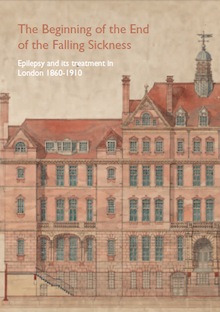
The Beginning of the End of the Falling Sickness: Epilepsy and its Treament in London 1860-1910

The Beginning of the End of the Falling Sickness: Epilepsy and its Treament in London 1860-1910

Simon Shorvon and Louise Shepherd

2012, Simon Shorvon. pp64

This volume was prepared for the 10th European Congress of Epileptology (ECE) of the International League Against Epilepsy (ILAE) was held in London 30 September to 4 October 2012 at the ExCel Centre. It is to accompany the small historical exhibition was compiled illustrating the evolution of the study of epilepsy in London between the years 1860 and 1910.

Around 1860, considerable progress was made in the study of epilepsy, and it was from then, over a period of about 50 years, that epilepsy largely shed its skin of superstition and emerged in its modern form. London was a major centre for this transformation. It was in London that a number of physicians and surgeons changed the conceptual basis of epilepsy, the first effective drug treatment of epilepsy was discovered, the first hospital was established specifically for the treatment of epilepsy, the cortical localisation of epileptic activity was demonstrated, and the first surgical operation for epilepsy was carried out. Furthermore, through these activities epilepsy rose from being a condition of general obscurity to become the hierophant of brain disease, and a central concern of neurology, medicine and neuroscientific thought. There was of course much work in other centres, largely in Europe, and considerable traffic of ideas and people around Europe and the United States of America; but, for this short period, London remained the main focus for both clinical and theoretical advances in the field of epilepsy. This book outlines the history of the study of epilepsy in London in this period, and the text includes photographs of contemporary documents and illustrations.


TABLE OF CONTENTS

Preface
1. Introduction
2. Epilepsy in London in 1860, new hospitals and early
3. Epilepsy physicians 1
4. John Hughlings Jackson (1835 – 1911)
5. Sir David Ferrier (1843 – 1928)
6. Sir William Gowers (1845 – 1915)
7. Sir Victor Horsley (1857 – 1916)
8. Epilepsy in London by 1910 1
9. Bromides and other medicinal treatments
Catalogue

The Causes of Epilepsy: Common and Uncommon Causes in Adults and Children

The Causes of Epilepsy: Common and Uncommon Causes in Adults and Children

Edited by: Simon D. Shorvon, Frederick Andermann, Renzo Guerrini 

Cambridge University Press, Cambridge. 

ISBN 978-1-4051-8383-3 

pp 790 

Causation is an aspect of epilepsy neglected in the scientific literature and in the conceptualization of epilepsy at a clinical and experimental level. It was to remedy this deficiency that this book was conceived. The book opens with a draft etiological classification that goes some way to filling the nosological void. The book is divided into three etiological categories: idiopathic, symptomatic, and provoked epilepsies. Each chapter considers topics in a consistent fashion, dealing with the phenomenon of epilepsy in each etiology, including its epidemiology, clinical features and prognosis, and any specific aspects of treatment. The book is a comprehensive reference work, a catalogue of all important causes of epilepsy, and a clinical tool for all clinicians dealing with patients who have epilepsy. It is aimed at epileptologists and neurologists and provides a distillation of knowledge in a form that is helpful in the clinical setting.

The authorship is drawn from leading international authorities in the field providing an authoritative resource. It provides extensive coverage of the causes of epilepsy in all age groups, both common and rare, in over 100 chapters, and extensive illustrations and tables.


CHAPTER LIST

Foreword
Jerome Engel

Foreword
Sir John Bell

Preface
Simon Shorvon

Section 1 – Introdution
1. Historical introduction
Simon Shorvon

2. The etiological classification of epilepsy
Simon Shorvon

3. Epileptogenesis in idiopathic epilepsy
Snezana Maljevic , Holger Lerche

4. Mechanisms of epileptogenesis in symptomatic epilepsy
Mark Cook

Section 2 – Idiopathic Epilepsy
5. Introduction to the concept of genetic epilepsy
Renzo Guerrini , Simon Shorvon, Frederick Andermann, Eva Andermann

Subsection 2.1 – Pure epilepsies due to single-gene disorders
6. The genetic contribution to epilepsy: the known and missing heritability
Michael Johnson

7. Benign Familial Neonatal seizures
Perrine Plouin

8. Autosomal dominant nocturnal frontal lobe epilepsy
Paolo Tinuper, Francesca Bisulli

9. Genetic epilepsy with febrile seizures plus
Ingrid Scheffer, Yue-Hua Zhang

10. Severe myoclonic epilepsy of infancy or Dravet Syndrome
Carla Marini , Renzo Guerrini
11. Benign adult familial myoclonic epilepsy
Teiichi Onuma
Subsection 2-2 – Pure epilepsies with presumed complex inheritance
12. Idiopathic Generalised Epilepsy
Carlo Marini, Renzo Guerrini

13. Benign Partial Epilepsies of Childhood
Roberto Caraballo, Natalio Fejerman

Section 3 – Symptomatic Epilepsy
14. Introduction to the concept of symptomatic epilepsy
Simon Shorvon

Subsection 3.1 – Epilepsy Syndromes
15. West Syndrome and Lennox-Gastaut Syndrome
Renzo Guerrini, Carla Marini

Subsection 3.2 – Progressive myoclonic epilepsies
16. Unverricht-Lundborg disease
Maria Lehtinen, Anna-Elina Lehesjoki, Reetta Kalviainen

17. Dentato-rubro-pallido-luysian atrophy (DRPLA)
Teiichi Onuma

18. Lafora body disease
Anna Jansen

19. Epilepsy in mitochondrial cytopathies
Laurence Bindoff, Bernt Engelsen

20. Neuronal ceroid lipofuscinosis
Ruth Williams

21. Sialidosis and Gaucher disease
Silvana Franceschetti, Laura Canafoglia

22. Action myoclonus-renal failure syndrome
Eva Andermann

23. Progressive myoclonic epilepsies: other rarer causes
Frederick Andermann, Eva Andermann

Subsection 3.3 – Neurocutaneous syndromes
24. Tuberous Sclerosis complex
Catherine Chu-Shore, Elizabeth Thiele

25. Neurofibromatosis
Rosalie Ferner and Margaret Jackson

26. Sturge-Weber Syndrome
Alexis ArzimanoglouLeni Panagiotakaki

27. Other neurocutaneous syndromes
Ignacio Pascual-Castroviejo

Subsection 3.4 – Other single-gene disorders with epilepsy as a prominent symptom
28. Angelman syndrome
Bernard Dan, Stewart Boyd

29. Lysosomal disorders and Menkes syndrome
Edwin Kolodny, Swati Sathe

30. Neuroacanthocytosis
Anna Jansen

31. Organic acid, amino acids and peroxisomal disorders.
Maria Alice Donati, Serena Gasperini, Renzo Guerrini

32. Porphyria
Geoffrey Dean, Simon Shorvon

33. Pyridoxine-dependant epilepsy.
Sidney Gospe

34. Rett Syndrome and MECP2 and CDKL5 genotypes
Daniel Glaze

35. Urea cycle disorders
Linda Huh, Kevin Farrell

36. Wilson disease
JM Walshe

37. Disorders of cobalanin and folate metabolism
Michael Shevell, David Watkins, David Rosenblatt

38. Other single gene disorders
Vincent Navarro, Frédéric Sedel

Subsection 3.5 – Disorders of chromosome structure
39. Down syndrome.
Nadia Bahi-Buisson, Monika Eisermann, Olivier Dulac

40. Fragile X syndrome.
Irissa Devine, Carl Stafstrom

41. 4p (Wolf-Hirschhorn) syndrome
Agatino Battaglia

42. Inverted duplicated chromosome 15 (isodicentric chromosome 15)
Agatino Battaglia

43. Ring chromosome 20
Geneviève Bernard, Frederick Andermann

Subsection 3.6 – Developmental anomalies of cerebral structure (cortical dysplasia)
44. Hemimegalencephaly
M Scott Perry, Michael Duchowny

45. Focal cortical dysplasia and related variants
Ruben Kuzniecky

46. Agyria- pachygyria band spectrum
Elena Parrini, Renzo Guerrini

47. Agenesis of the corpus callosum
Dorothy Jones-Davis, Yolanda Lau, Elliott Sherr / Jones Davies

48. Polymicrogyria and schizencephaly
Renzo Guerrini, Carman Barba

49. Periventricular nodular heterotopia
Rahul Tathakrishnan, Yahya Aghakhani, François Dubeau

50. Microcephaly
Elizabeth Ross

51. Arachnoid cysts
Concezio Di Rocco, Gianpiero Tamburrini

52. Malformations of human cerebral cortex
Waney Squier

Subsection 3.7 – Hippocampal sclerosis and prenatal and perinatal injury
53. Hippocampal sclerosis
Fernando Cendes, Márcia Morita

54. Neonatal and postneonatal epilepsy – causes
Lei Mizrahi, Kevin Chapman

55. Cerebral palsy
Sameer Zuberi, Andreas Brunklaus

56. Vaccination and immunization
Simon Shorvon

Subsection 3.8 – Cerebral trauma
57. Open head injury
Flavio Giordano, Barbara Spacca, Lorenzo Genitori

58. Closed head injury
Manuel Muria-Fernandez, Jorge Borneo, Robert Teasell

59. De novo epilepsy after neurosurgery
Charles Polkey

60. Epilepsy after epilepsy surgery
Andre Palmini

61. Non-accidental braininjury
Renzo Guerrini, Alessio De Ciantis

Subsection 3.9 – Cerebral tumor
62. Glioma
William Gray, Henry Bulstrode

63. Ganglioglioma, Dysembryoplastic Neuroepithelial tumour and related tumours
Thomas Jacques, William Harkness

64. Hypothalamic hamartoma and gelastic epilepsy
John Kerrigan

65. Meningiomas
Sumeet Vadera, William Bingaman

66. Metastatic disease
Rolando Del Maestro, Abdulrahman Sabbagh, Ahmed Lary, Marie-Christine Guilot

Subsection 3.10 – Cerebral infection
67. Viral encephalitis
Jane Adcock

68. Bacterial meningitis and focal suppurative intracranial infections in children
Suresh Pujar, Richard Chin

69. Bacterial meningitis and pyogenic abscess in adults
Lina Nashef, Fahmida Chowdhury

70. Malaria
Charles Newton

71. Neurocysticercosis
Hector Garcia

72. Other Parasitic diseases
Manish Modi, Gagandeep and Singh

73. Tuberculosis
Nadir Bharucha, Roberta Raven, Vivek Nambiar

74. HIV infection
P Satischandra, S Sinha

75. Emerging and less common central nervous system viral encephalitides
HT Chong, CTTan

Subsection 3.11 – Cerebrovascular disease
76. Cerebral haemorrhage
Henry Dinsdale

77. Cerebral infarction and occult degenerative cerebrovascular disease
Ruth Namire, R Eugene Ramsey

78. Arteriovenous malformations
SA Tharin, Autumn Klein, Robert Friedlander

79. Cavernous maalformations
Adrian Siegel

80. Other vascular disorders
Leif Gjerstad, Erik Taubøll

Subsection 3.12 – Cerebal immunological disorders
81. Rasmussen encephalitis and related conditions
Antonio Gambardella, Frederick Andermann

82. Systemic lupus erythematosus and other collagen vascular diseases
Rolando Cimaz, Andrea Taddio

83. Inflammatory and immunological diseases of the central nervous system
Michael Lunn

Subsection 3.13 – Other cerebral disorders
84. Psychiatric disorders
Brent Elliott, John O’Donavan

85. Mutiple sclerosis and other acquired demyelinating diseases
Mark Manford

86. Hydrocephalus, porencephaly
Pierangelo Veggiotti, Frederica Teutonico

87. Alzheimer disease and other adult degenerative disorders
Sigmund Jenssen, Kandan Kulanfaivel

Section 4 – Provoked Epilepsies
88. Introduction to the concept of provoked epilepsy
Simon Shorvon, Renzo Guerrini, Frederick Andermann

Subsection 4.1 Precipitating factors
89. Fever
Thomas Bleck

90. The menstrual cycle and catamenial epilepsy
Andrew Herzog

91. Sleep
Liborio Parrino, Giulia Milioli, Fernado De Paolis, Andrea Grassi, Gioia Gioi, Mario Giovanni Terzano

92. Metabolic and endocrine-induced seizures
Bernhard Steinhoff

93. Electrolyte or sugar disturbances
Bindu Menon, Simon Shorvon

94. Drug-induced seizures
Aidan Neligan

95. Alcohol and toxin-induced seizures
Michelle Shapiro, Andrew Cole

Subsection 4.2 – Reflex seizures
96. How reflex mechanisms cause epilepsy
Benjamin Zifkin, Frederick Andermann

97. Visual stimuli, photosensitivity and photosensitive epilepsy
Dorothée KAsteleijn-Nolst Trenité, Laura Cantonetti, Pasquale Parisi

98. Startle-induced (and other sensory induced) epilepsy
Jean-Pierre Vignal , Andrine Aubert, Patrick Chauvel

99. Primary reading epilepsy
Matthias Koepp

100. Auditory-induced epilepsy
Carlo Di Bonaventura, Frederick Andermann

101. Focal reflex seizures – with emphasis on epilepsy triggered by eating
Benjamin Zifkin, Guy Rémillard, Frederick Andermann

102. Hot water epilepsy
P Satischandra, S Sinha, Anuranjan Anand

103. Reflex epilepsy with higher-level processing
Benjamin Zifkin, Frederick Andermann

Section 5 – Status Epilepticus
104. Introduction – how status epilepticus is caused
Karthik Rajasekaran, Howard Goodkin

105. Causes of status epilepticus in children
Rodd Scott

106. The causes of convulsive status epilepticus in adults
Elizabeth Waterhouse, Peter Kaplan

107. Uncommon causes of status epilepticus
Simon Shorvon, Raymond Tan, Aidan Neilgan

108. Causes of non-convulsive status epilepticus in adults
Pierre Thomas

109. Causes of epilepsia partialis continua
Hirokazu Oguni and Frederick Andermann

100. Afterword
Simon Shorvon, Renzo Guerrini, Frederick Andermann

Handbook of the Treatment of Epilepsy (3rd Edition)

Handbook of the Treatment of Epilepsy (3rd Edition)

Author: Simon Shorvon 

Publisher: Wiley-Blackwell 

1200 pages


The Handbook of Epilepsy Treatment is a monograph on the treatment of epilepsy. It is a practical but comprehensive coverage of medical and surgical treatment with extensive tables and summaries, designed for trainees and specialists. The Handbook of Epilepsy Treatment covers:

Treatment of the different forms and causes of epilepsy
Treatment in the different commonly encountered clinical situations
Treatment in children, in adults, in the elderly, in women, in epilepsy syndromes and in those with special needs and requirements
Epilepsy drugs – their pharmacology, kinetics, side effects, effectiveness and practical usage in the clinic
Epilepsy surgery – the various types, the indications, assessment and outcome
A pharmacopeia summarizes the entire range of anti-epileptic medications with emphasis on effective prescribing in the clinical setting.


TABLE OF CONTENTS

Chapter 1 Definitions and Epidemiology.
Definitions
Frequency and population features of epilepsy

Chapter 2. Seizure Type and Anatomical Location of Seizures.
Seizure type.
Classification of partial seizures by anatomical site of seizure onset.

Chapter 3. Epilepsy Syndromes.
ILAE Classification of the Epilepsies and Epilepsy Syndromes.
The epilepsy syndromes.

Chapter 4. The Causes of Epilepsy.
Idiopathic epilepsy.
Symptomatic epilepsy of genetic or congenital origin.
Symptomatic epilepsy due to acquired causes.
Provoked seizures.

Chapter 5. Principles of Treatment.
Why treat epilepsy? The aims of treatment.
The risks of epilepsy and its treatment.
Choice of antiepileptic drug therapy based on seizure type.
Treatment of specific epilepsy syndromes.
Principles of treatment of newly diagnosed patients.
Principles of treatment of patients with established active epilepsy.
Treatment of patients with epilepsy in remission.
Psychiatric disorders in epilepsy.
Life-threatening idiosyncratic reactions.
Complementary and alternative therapy in epilepsy.
Genetic counselling in epilepsy.

Chapter 6. Treatment of Epilepsy in Specific Groups.
Treatment of epilepsy in children.
Treatment of epilepsy in patients with additional handicaps.
Epilepsy in elderly people.
Treatment of epilepsy in women.

Chapter 7. Pharmacokinetic Principles of Antiepileptic Drug Treatment.
Drug absorption.
Drug distribution.
Drug elimination (metabolism and excretion).
Blood level measurements.

Chapter 8. The Antiepileptic Drugs.
Carbamazepine.
Clobazam.
Clonazepam.
Eslicarbazepine acetate.
Ethosuximide.
Gabapentin.
Lacosamide.
Lamotrigine.
Levetiracetam.
Oxcarbazepine.
Phenobarbital.
Phenytoin.
Pregabalin.
Primidone.
Rufinamide.
Tiagabine.
Topiramate.
Valproate.
Vigabatrin.
Zonisamide.
Other drugs used in the treatment of epilepsy.
– Acetazolamide.
– Benzodiazepines.
– Corticosteroids and ACTH.
– Felbamate.
– Piracetam.
– Stiripentol.

Chapter 9. The Emergency Treatment of Epilepsy.
How to deal with a seizure.
Status epilepticus.
Antiepileptic drugs used in status epilepticus.

Chapter 10. The Surgical Therapy of Epilepsy.
Presurgical assessment – general points.
Surgery in epilepsy arising in the mesial temporal lobe.
Surgery in epilepsy arising in extratemporal regions and the temporal neocortex.
Cortical dysplasia (malformations of cortical development).
Surgery where no lesion is apparent on neuroimaging (‘MRI-negative cases’)
Hemispherectomy, hemispherotomy and other large resections.
Corpus callosectomy (corpus callosum section, corpus callosotomy).
Multiple subpial transection.
Vagal nerve stimulation.
Other functional surgical procedures.
The organization of epilepsy surgery care: the epilepsy surgery centre.
Pharmacopoeia.
Antiepileptic drugs – indications in epilepsy.
Antiepileptic drugs – dose, average adult values.
Antiepileptic drugs – dose, interactions.
Antiepileptic drugs – dose, in children.
Antiepileptic drugs – summary of side effects.
Antiepileptic drugs – summary of metabolism.
Antiepileptic drugs – summary of pharmacokinetic values (typical adult values).
Antiepileptic drugs – modes of action.

Further Reading.

Epilepsy (Oxford Neurology Library Series)

Epilepsy (Oxford Neurology Library Series)

Simon Shorvon 
Oxford University Press, Oxford. 2009. | ISBN 978-0-19-957692-0 |pp. 172

This book is part of the Oxford Neurology Library. It aims to be a concise pocketbook for the practicing clinician. The purpose of the book volume is to provide a short but comprehensive survey of epilepsy and its management for the busy clinician. It is very definitely intended to be a clinical tool—and what is provided is clinical information rather than data relevant to research or experimental study. Factual information is contained as much as possible, in a digestible form, and to avoid longwinded or complex description. Diagnosis, treatment and counselling are especially emphasized, for it is in these areas that accurate data and clinical skill are particularly needed. Pharmacological, pharmacokinetic and therapeutic details of individual drugs are summarized in tables for rapid reference. Emergency and surgical therapies for epilepsy are also covered. The book is designed for generalists, specialists and trainees.


TABLE OF CONTENTS

Preface vi
Symbols and abbreviations vii
1.Definition and frequency of epilepsy 1
2. Clinical forms of epilepsy 7
3. The causes of epilepsy 29
4. The differential diagnosis and investigation of epilepsy 49
5. Principles of treatment of epilepsy 65
6.Anti-epileptic drugs 91
7. Epilepsy surgery 123
8. Emergency treatment of epileptic seizures 139
9. Social and psychosocial aspects of epilepsy 153
Index 167

The Epilepsies 3

The Epilepsies 3

Edited by Simon Shorvon and Timothy A. Pedley 
Saunders, Philadelphia, 2009. 
355 pages 38 ills | Trim size 6 X 9 in | ISBN: 1405131349

This title in the Blue Books of Neurology series highlights advances in epileptology and new ways of managing seizure disorders. Contributors from around the world lend a global perspective. The chapters are focused on areas in which there are significant new findings or those that are controversial. Basic research and clinical topics are included. There are detailed discussions of difficulties in diagnosing and treating epilepsy, including the latest pharmacologic management strategies.

TABLE OF CONTENTS

1. Seizure Prediction: Its Evolution and Therapeutic Potential. pp1-16
David Kreiger and Brian Litt

2. Febrile Seizures. pp 17-26
Celine M Dube and Tallie Z Baram
3. Mechanisms of Action of Levetiracetam and Newer SV2A Ligands. pp 27-38
Henrik Klitgaard and Alain Matagne

4. Long-Term Effects of Seizures on Brain Structure and Function. pp 39-52
Howard F Goodkin and Edward H Bertram

5. Dipole Source Modeling in Epilepsy: Contribution to Clinical Management. pp 53-64
John S Ebersole

6. EEG-correlated fMRI in Epilepsy: current state of the art. pp 65-83
Rachel Thornton and Louis Lemieux

7. Epilepsy and Sleep. pp 84-96
Soheyl Noachtar and Jan Remi

8. Cortical Myoclonus and Epilepsy: Overlap and Differences. pp 97-118
Renzo Guerrini and Francesco Mari

9. The Life-Threatening Epilepsies of Childhood and Their Treatment. pp 119-128
Catherine Chiron

10. The Spectrum of Epilepsies Associated with Generalized Spike and Wave Patterns. pp 129-144
Michael Koutroumanidas and Chrysostomos Panayiotopoulos

11. Epilepsies due to Monogenic Disorders of Metabolism. pp 145- 160
Chantal Depondt

12. Rasmussen’s Encephalitis. pp 161-176
Tiziana Granata and Carlo Antozzi

13. Seizures and Epilepsy in the Elderly. pp 177-193
Ann Mendiratta and Timothy Pedley

14. Psychosis of Epilepsy. pp 194-210
Andres M Kanner

15. Sudden Unexpected Death in Epilepsy. pp 211-240
Fergus Rugg-Gunn and Lina Nashef

16. The Management of Epilepsy in Pregnancy. pp 241-264
Torbjorn Tomson and Dina Battino

17. Does Early Treatment Influence the Long-Term Outcome of Epilepsy. pp 265-276
Anthony Marson

18. Pharmacodynamic Interactions of Antiepileptic Drugs. pp 277-293
Gail D Anderson and Jong M Rho

19. The Surgery of Temporal Lobe Epilepsy I – Historical Development, Patient Selection, and Seizure Outcome. pp 294-306
Nicholas Moran and Simon Shorvon

20. The Surgery of Temporal Lobe Epilepsy II – Surgical Complications and Long-Term Adverse Effects. pp 307-321
Simon Shorvon and Nicholas Moran

21. Brain Stimulation in Epilepsy – An Old Technique with a New Promise? pp 322-241
Kristl Vonck and Paul Boon

International League Against Epilepsy (1909-2009)

International League Against Epilepsy (1909-2009)

Simon Shorvon, Giselle Weiss, Giuliano Avanzini, Jerome Engel, Harry Meinardi, Solomon Moshe, Edward Reynolds, Peter Wolf. 
Wiley-Blackwell, 2009. | pp. 338. | ISBN 9781405 1895520

The International League Against Epilepsy (the ILAE) was founded on August 30th 1909, and is one of the oldest international subspecialist organisations in medicine. This book is published to mark its centenary, with the aims of documenting its course over its first 100 years, of interpreting its activities within their historical context, and of assembling source material.

The book is the result of a large amount of original research from published and unpublished written material and from the verbal recollections and experiences of individuals within the organisation. The text attempts to provide a scholarly, lively and instructive history, which is the definitive account of an organisation whose goal throughout its 100 year history has been to work towards the alleviation of the suffering caused by epilepsy around the world.

The authors of this book have held various positions on the ILAE executive. Giuliano Avanzini and Jerome Engel have each served both as Treasurer and President of the ILAE; Harry Meinardi was previously ILAE Secretary-General and President; Solomon Moshé is currently Secretary-General and President-elect of the ILAE; Edward Reynolds was a previous ILAE President; Peter Wolf is currently President and has been Secretary General of the ILAE; Simon Shorvon serves currently as co-Editor-in-Chief of Epilepsia and was previously ILAE Information Officer and Vice- President. Giselle Weis is the Centenary Archivist of the League.


TABLE OF CONTENTS

Preface, viii – xix
Simon Shorvon

Introduction, x-xiv
Simon Shorvon

1. International League Against Epilepsy – the first period: 1909–1952, 1
Simon Shorvon and Giselle Weiss

2. International League Against Epilepsy – the second period: 1953–1992. pp 45 – 98
Giselle Weiss and Simon Shorvon

3. International League Against Epilepsy – the third period: 1993– 2009. pp 97 – 130
Giuliano Avanzini, Jerome Engel, Jr., Edward Reynolds, Simon Shorvon,Giselle Weiss and Peter Wolf

4. Development of the classification and nosology of epilepsy 1909–2009, pp 131 – 142
Peter Wolf

5. Organisation of basic science in epilepsy with special reference to the International League Against Epilepsy, pp 143 – 152
Jerome Engel, Jr., Solomon Moshé and Giuliano Avanzini

6.The relations of the International League Against Epilepsy with the lay organisations, pp 153 – 162
Harry Meinardi

7. Epilepsia – the journal of the International League Against Epilepsy, pp 163 – 206
Simon Shorvon

8. International League Against Epilepsy – commissions, task forces and the Global Campaign Against Epilepsy, pp 207 – 215
Peter Wolf and Edward Reynolds

9. International League Against Epilepsy – the international symposia and congresses, 1909–2009, p 216 – 254
Giselle Weiss and Simon Shorvon

Appendices
Appendix 1 ILAE Chapters and dates of incorporation, 255
Appendix 2 ILAE Executive Committee membership, 259
Appendix 3 ILAE Commission membership, 263
Appendix 4 ILAE Financial statements, 273
Appendix 5 ILAE Constitutions and Bylaws, 289
Appendix 6 ILAE Ambassadors for Epilepsy, 1968–present, 309
Giselle Weiss

Neurology: A Queen Square Textbook

Neurology: A Queen Square Textbook

Eds: Clarke C, Howard R, Shorvon S, Rossor M 
Wiley-Blackwell, Oxford. 
991 Pages | ISBN-10: 1-4051-3443-7 | ISBN-13: 978-1-4051-3443-9

This is a textbook of neurology from the UCL Institute of Neurology and National Hospital for Neurology and Neurosurgery at Queen Square, London, and content based on the neurological training programme.

The book attempts to blend clinical and basic neuroscience, particularly in relation to molecular biology, genetics, neurochemistry and physiology. The book presents a synthesis of modern science with traditional clinical neurology rooted in history taking and the meticulous elicitation of physical signs.


TABLE OF CONTENTS

1. Neurology Worldwide: the Burden of Neurological Disease. pp 1 – 12
Simon Shorvon

2. Nervous System Structure and Function. pp 13 – 74
Charles Clarke and Roger Lemon

3. The Language of Neurology: Symptoms, Signs and Basic Investigations. pp 75 – 108
Charles Clarke, Richard Fracknowiak, Robin Howard, Martin Rossor and Simon Shorvon

4. Stroke and Cerebrovascular Diseases. pp 109 – 154
Nicholas Lossef, Martin Brown and Joan Grieve

5. Movement Disorders. pp 155 – 189
Niall Quinn, Kailash Bhatia, Peter Brown, Carla Cordivari, MArwan Hariz, Andrew Lees, Patricia Limousin, Mary Robertson, Anette Schrag, Sarah Tabrizi

6. Epilepsy and Related Disorders. pp 198 – 244
Simon Shorvon, John Duncan, Mathias Koepp, Josemir Sander, Shelagh Smith, Matthew Walker

7. Cognitive Impairment and Dementia. pp 245 – 288
Martin Rossor, John Collinge, Nick Foz, Robin Howard, Giovanni Mallucci, Catherine Mummery, Jason Warren

8. Infection in the Nervous System. pp 289 – 336
Robin Howard and Hadi Manji

9. Nerve and Muscle Disease. pp 227 – 410
Michael Lunn, Michael Hanna, Robin Howard, Matthew Parton, Mary Reilly

10. Multiple Sclerosis and Demyelinating Diseases. pp 411 – 448
Siobhan Leary, Gavin Giovannoni, Robin Howard, David Miller, Alan Thompson

11. Headache. pp 449 – 464
Peter Goadsby

12. Cranial Nerve Disorders. pp 465 – 488
Paul jarman, Jeremy Chataway, Charles Clarke, Robin Howard

13. Neuro-ophthalmology. pp 489 – 532
Gordon Plant, James Acheson, Charles Clarke, Elizabeth Graham, Robin Howard, Simon Shorvon

14. Neuro-otology. pp 533 – 584
Rosalyn Davies, Linda Luxon, Doris-Eva Bamiou, Simon Shorvon

15. Spinal Cord Disorders. pp 585 – 628
Simon Farmer, Adrian Casey, David Choi, Robin Howard, Geoffrey Raisman

16. Cerebellar Ataxias and Related Conditions. pp 629 – 644
Nicholas Wood

17. Restorative and rehabilitation neurology. pp 645 – 676
Richard Greenwood, Jan Marsden, Diane Playford, Valerie Stevenson, Nick Ward

18. Toxic, Metabolic and Physical Insults to the Nervous System and inborn errors of metabolism. pp 675 – 722
Robin Howard, Robin Lachmann, Philip Lee, Alexander Leff

19. Disorders of Consciousness, Intensive Care Neurology and Sleep. pp 723 – 770
Robin Howard, Nicholas Hirsch, Neil Kitchen, Dimitri Kullmann, Matthew Walker

20. Neuro-oncology. pp 771 – 822
Jeremy Rees, Sebastian Brandner, Robin Howard, Rolf Jager, Susan Short, David Thomas, Emma Townsley, Gelareh Zadeh

21. Psychiatry and Neurology. pp 823-846
Michael Trimble

22. Pain. pp 847 – 870
Geoffrey Schott

23. Autonomic Dysfunction. pp 871 – 892
Christopher Matthias

24. Uro-neurology. pp 893 – 912
Clare Fowler, Sohier Elneil

25. Systemic Conditions and Neurology. pp 913 – 944
David Werring, Robin Howard, Alexander Leff, Simon Shorvon

Understanding Epilepsy

Understanding Epilepsy

Dr Matthew Walker & Professor Simon Shorvon

‘Understanding Epilepsy’ is an illustrated guide which aims to clear and concise information and advice for patients, their families and friends and the lay public. The contents include:

Diagnosis of epilepsy and the different types of epileptic seizures
Investigations carried out and the causes of epilepsy
Medical and surgical treatment of epilepsy
Lifestyle and selfhelp guidelines
Social issues
Useful addresses and websites
Glossary of terms
The book is part of a series produced by the British Medical Association in association family Doctor Publications. Its usual retail cost is £4.75

New edition published 2009.